
• Skip to main content
  • Skip to secondary menu
  • Skip to primary sidebar
emergency preparedness

Simply Preparing

Survival blog for disaster and emergency preparedness.

  • Home
  • About Simply Preparing
  • Beginning Prepping
  • Simple & Inexpensive Prepper Projects

Pressure Canners Tutorial

November 1, 2013 By ParkerMama

As an Amazon Associate, I earn from qualifying purchases.

Tis the season!  No, not that season.  Canning season! The season where families like mine harvest their garden goodness, plop it into little jars, and process it in one of my pressure canners to last at least through the winter.  If we’ve had a really great harvest we might even get lucky enough to can up enough of summer to last a couple of years.

Often people hear the word ‘canning’ and run for the hills.  I promise it’s not that hard, and it is very safe as long as you follow a few simple directions.
how to use a pressure canner

The Pressure Canner.

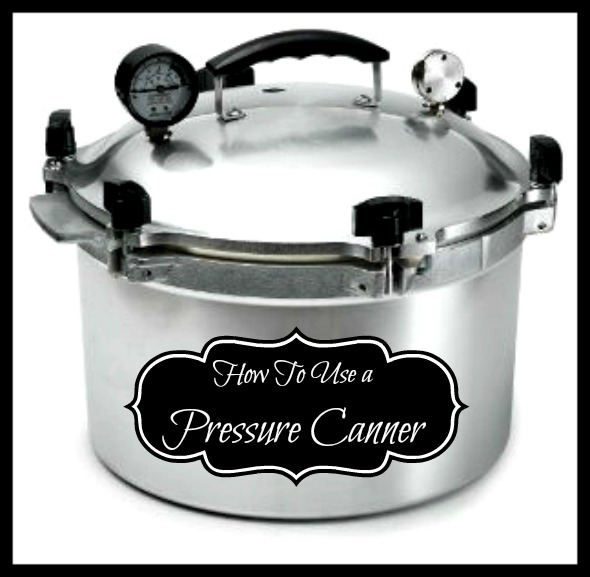
This is the type of canner you might be the most familiar with.  This is actually an All American Canner.  You can find cheaper varieties, but after years of canning we finally traded up to this baby and I wish now I would have done so much sooner.  The All American has no need for the rubber gaskets that other pressure canners require.  It also comes in a size that allows you to process 14 quarts at a time.  It’s built to last too.  I’ll be passing this sweet thang down to my kids when I cross over to the great canning season in the sky.

Modern pressure canners are lightweight, thin-walled aluminum or stainless steel kettles. Most have twist-on lids fitted with gaskets. They also have either  a dial gauge for indicating the pressure or a weighted gauge (which both regulates the pressure and indicates…..that’s the ‘rattling noise you’ll hear). Pressure canners can usually handle either one layer of quart or smaller size jars, or deep enough for two layers of pint or smaller size jars.

Foods that REQUIRE a pressure canner:

  • vegetables
  • low acidic fruits
  • meat

These items need a pressure canner rather than a water bath canner because ordinary water bath canners can only reach 212 F and can not to kill the types of bacteria that will grow in low acid foods. This temperature can be reached only by creating steam under pressure as achieved in quality pressure canners.

A few thoughts on canning dairy.  I know a lot of people who are now ‘canning’ butter.  The professionals at my canning extension suggest that home canning butter is not a safe idea.  There may be a ton of people who have canned their own butter and lived to tell the tale.  I choose not to put my family at risk.  The fat found in butter can actually protect C. botulinum and toxin formation even if the butter has been pressure canned. I may be a wuss, but I’m a wus that won’t end up in the emergency room.

Here are a couple of the best websites for canners-

National Center for Home Preservation:  This website gets into the nitty-gritty of canning including safety requirements.

Food in Jars:  I dare you to spend time on this site and not want to start up your own canning engines.  From book reviews to their Canning 101 posts, this site is pure canning crack.  Go ye now and dream.  You can come back and thank me later.

Now there may be those of you wishing I had written this post much earlier in the season…..like when your area hadn’t already been blasted by the first frost of the season.  The idea that canning isonly a summer/fall activity is no longer true.   Do you participate in Zaycon Foods?  You could spend a day or two pressure canning hamburger or chicken!

Are you an experienced canner?  A beginner?  What do you can the most of?

Filed Under: Food Storage Tagged With: All American Canner, canning, food storage, pressure cooker

About ParkerMama

Tammy is a mom to 6 wonderful kids, including Parker, who came with an extra chromosome! She is passionate about special needs advocacy, living within her means, and preparing for an uncertain future. Tammy's main blog is Praying For Parker. Make sure to visit her there as well!

Primary Sidebar

Why Worry About Preparing?

Preparedness makes more sense now than ever.

As we move through 2026, it’s clear that the world is shifting in ways many of us can feel — even if we can’t always predict what’s next. In recent years we’ve seen global supply chain disruptions, international conflicts affecting energy and food markets, extreme weather events across multiple continents, cyberattacks on critical infrastructure, economic uncertainty, inflation, and rising costs for everyday essentials.

From global pandemics to geopolitical tensions and natural disasters happening around the world, the message is the same: stability isn’t guaranteed.

Whether or not you believe we’re headed toward a major global reset, there are plenty of everyday realities that make preparedness practical — not extreme. Job loss. Health emergencies. Severe storms. Power outages. Supply shortages. Economic downturns.

Preparedness isn’t about panic.

It’s about positioning your family to respond calmly when life throws the unexpected your way.

We’ve found that the more intentional emergency planning my family does, the less I worry about the big “what ifs.” When you have food storage in place, backup plans for power and water, and practical skills to lean on, uncertainty feels manageable.

That peace of mind is powerful.

Here at Simply Preparing, we share the survival tips, preparedness strategies, and practical systems we’ve learned along the way — from pantry building and food storage to emergency planning and self-reliance skills. Our goal is not to create fear, but to create confidence.

And we hope you’ll join the conversation.

Preparedness is not a solo journey. We all bring different experiences, lessons, and perspectives to the table. Share what you’ve learned. Ask questions. Leave comments. We grow stronger and smarter together.

Now, let’s get started prepping.

Pick a post and begin reading. At the end of every article, the blog will randomly suggest three additional preparedness posts to explore. Set aside just 10 minutes a day to build your knowledge base. Small, consistent steps add up faster than you think.

Because when it comes to preparedness, we’re never truly “done” learning — and we’re never wrong for being ready.

Let’s prepare wisely.

Affiliate Disclosure

We are a participant in the Amazon Services LLC Associates Program, which means we may earn a small commission if you make a purchase—at no additional cost to you. We only recommend products we personally trust and believe are worth having as part of a simple, practical preparedness plan.

Privacy Policy and Cookies

This site uses cookies. Please read our Privacy Policy so you fully understand how we use them.

Copyright © 2025 Indigo Ink, LLC: Simply Preparing Disaster and Emergency Preparedness · WordPress · Log in