
• Skip to main content
  • Skip to secondary menu
  • Skip to primary sidebar
emergency preparedness

Simply Preparing

Survival blog for disaster and emergency preparedness.

  • Home
  • About Simply Preparing
  • Beginning Prepping
  • Simple & Inexpensive Prepper Projects

The Pros and Cons of MREs

December 18, 2013 By Guest Author

As an Amazon Associate, I earn from qualifying purchases.

Most preppers and outdoor enthusiasts are familiar with MREs. MRE stands for meal, ready-to-eat, and they are most common as field rations for the military. MREs are meant to feed one individual for one meal. Fortunately, these meals in a bag or box have come a long way since hardtack, cans of Spam, and freeze-dried meat. Modern MREs offer a wide range of foodstuffs and now include heating elements, desserts, and beverage powders. There are even MREs made for cold weather that pack plenty of extra calories when you need them to stay warm.

All of the items included in modern MREs make them extremely popular for preppers and outdoor recreationists alike, including campers and backpackers. You might be wondering, though, if MREs are right for you as part of an emergency preparedness kit. Before you run out and buy cases of MREs to have when disaster strikes, it is helpful to know both the advantages and disadvantages of these.
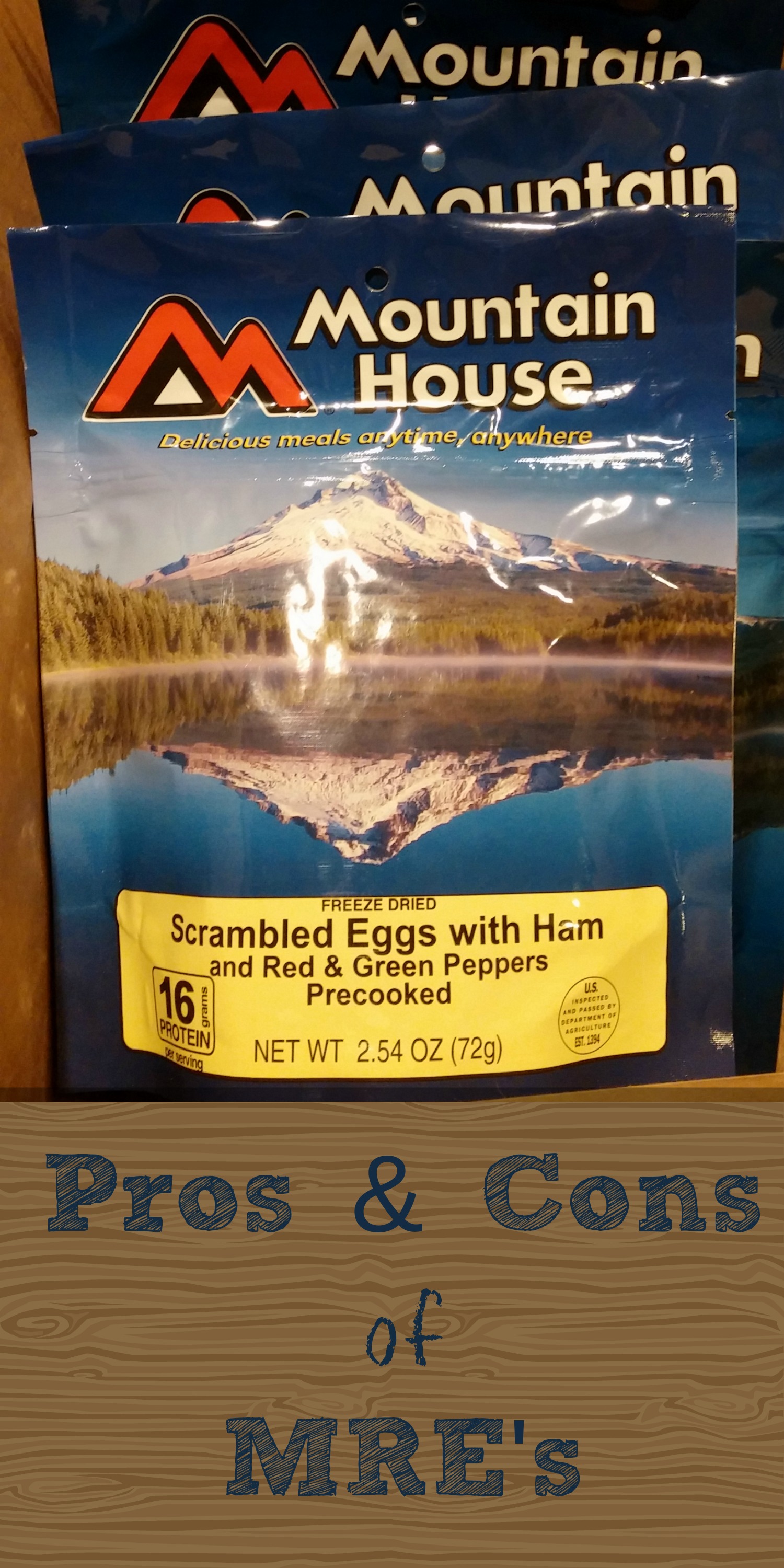
pros and cons of mresThe Pros:

  • Versatility – Modern-day MREs offer a wide variety of options when it comes to food. MREs from the U.S. military offer a great diversity that was missing even just a few years ago. You can now select those with chicken, beef, or pork as the main dish or vegetarian meals. There are also a large variety of carbohydrates like pasta, rice, oatmeal, and applesauce. MREs come in breakfast, lunch, and dinner choices.

  • Heating Elements – MREs now come with some kind of heating element so that you can have a hot meal even if you don’t have access to a stove, and these heating elements come right in the bag. This makes MREs perfect when you are left without electricity or when you find yourself out in the wildness miles from civilization.

  • Sheer Number of Items – MREs come packed with numerous food items including a main dish, side dishes, desserts, energy bars, beverage flavoring powders, instant coffee, and, of course, the customary salt, pepper, toilet paper, spoon, chewing gum, and Tabasco sauce if you’re lucky. What is included in one MRE differs immensely, and no two are ever exactly alike!

  • Portability – MREs can be easily thrown into a backpack or bug out bag. Once you open a MRE, you have everything you need for a meal.

The Cons:

  • The Amount of Calories – Since MREs were designed for soldiers in combat, one meal contains a large amount of calories. Each MRE contains about 1200 calories and that makes it great for outdoor pursuits but hard on the stomach for more sedentary individuals. An entire MRE should probably not be consumed all in one sitting.

  • Weight – MREs weigh more than freeze-dried meals. It is something to take into consideration if you are thinking about packing them around all day.

  • Cost – MREs are more expensive compared to fresher foods and freeze-dried meals. On average, a single MRE costs around $8 to $10, and a case of twelve can cost around $80 to $100.

  • Availability – MREs are not something that you can find at your local grocery store. Special military supply stores or outdoor stores might carry them but they will probably be limited in quantity and variety. Thanks to the Internet MREs are now available from several online retailers. If you order online, however, you will obviously pay more for shipping.

Filed Under: Food Storage Tagged With: freeze dried food, mre's

Primary Sidebar

Why Worry About Preparing?

Preparedness makes more sense now than ever.

As we move through 2026, it’s clear that the world is shifting in ways many of us can feel — even if we can’t always predict what’s next. In recent years we’ve seen global supply chain disruptions, international conflicts affecting energy and food markets, extreme weather events across multiple continents, cyberattacks on critical infrastructure, economic uncertainty, inflation, and rising costs for everyday essentials.

From global pandemics to geopolitical tensions and natural disasters happening around the world, the message is the same: stability isn’t guaranteed.

Whether or not you believe we’re headed toward a major global reset, there are plenty of everyday realities that make preparedness practical — not extreme. Job loss. Health emergencies. Severe storms. Power outages. Supply shortages. Economic downturns.

Preparedness isn’t about panic.

It’s about positioning your family to respond calmly when life throws the unexpected your way.

We’ve found that the more intentional emergency planning my family does, the less I worry about the big “what ifs.” When you have food storage in place, backup plans for power and water, and practical skills to lean on, uncertainty feels manageable.

That peace of mind is powerful.

Here at Simply Preparing, we share the survival tips, preparedness strategies, and practical systems we’ve learned along the way — from pantry building and food storage to emergency planning and self-reliance skills. Our goal is not to create fear, but to create confidence.

And we hope you’ll join the conversation.

Preparedness is not a solo journey. We all bring different experiences, lessons, and perspectives to the table. Share what you’ve learned. Ask questions. Leave comments. We grow stronger and smarter together.

Now, let’s get started prepping.

Pick a post and begin reading. At the end of every article, the blog will randomly suggest three additional preparedness posts to explore. Set aside just 10 minutes a day to build your knowledge base. Small, consistent steps add up faster than you think.

Because when it comes to preparedness, we’re never truly “done” learning — and we’re never wrong for being ready.

Let’s prepare wisely.

Affiliate Disclosure

We are a participant in the Amazon Services LLC Associates Program, which means we may earn a small commission if you make a purchase—at no additional cost to you. We only recommend products we personally trust and believe are worth having as part of a simple, practical preparedness plan.

Privacy Policy and Cookies

This site uses cookies. Please read our Privacy Policy so you fully understand how we use them.

Copyright © 2025 Indigo Ink, LLC: Simply Preparing Disaster and Emergency Preparedness · WordPress · Log in