• Skip to main content
  • Skip to secondary menu
  • Skip to primary sidebar
emergency preparedness

Simply Preparing

Survival blog for disaster and emergency preparedness.

  • Home
  • About Simply Preparing
  • Beginning Prepping
  • Simple & Inexpensive Prepper Projects

Water Storage and Flint, Michigan.

January 19, 2016 By ParkerMama

We may earn money or products from the companies mentioned or linked to in this post, including Amazon Affiliate links

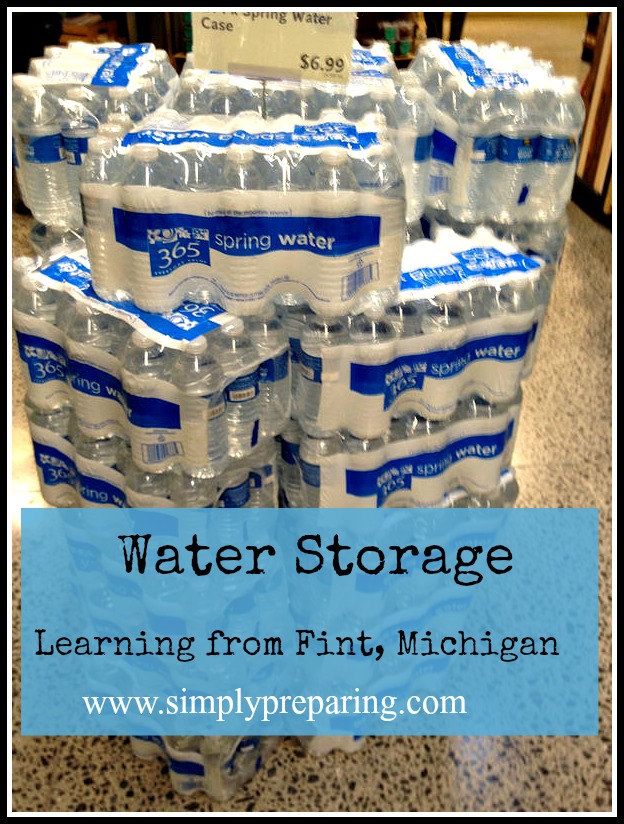
Water storage has been on my mind since the state of Michigan’s crisis with safe drinking water that began several months ago.  Flint’s tap water became contaminated with too much lead after the city switched it’s water supply in 2014 to save money while under state financial management.

Ensuring residents have safe water to drink has been a struggle. You can’t boil lead out of water.  People have been told to not drink the water until it has been determined to be safe.  Guard members have finally been called in to assist the police and volunteers to hand out bottled water, filters and water testing kits.

Then to really add insult to injury, the residents of Flint are still being required to pay their water bills.  You know, for water that is too dangerous to drink.  Think toxic waste dangerous.  Swell.  All I can say is thank goodness for celebrities.

I keep thinking of how much less stressful things might have been if residents would have had a supply of water storage instead of having to scramble and depend on the government.  As a matter of fact, it’s being reported that Michigan officials knew last year that Flint’s water might be poisoned, but chose to keep that possibility to themselves.  Sweet, eh?   The FDA is conduction a full review of the situation.
water storage

I’ve written about emergency water storage on the blog and Barb created this information filled post to help you calculate your family’s water storage needs.  It’s a good time to review both posts.

Here are a few more things to consider when storing water.

*Don’t use empty milk jugs for water storage.  The plastic is too thin and will break down within a few months.  Bacteria from the milk can become lodged in the plastic of the jug and then transferred to your water.

*Do not store your water near gasoline, kerosene, pesticides or similar substances.

*If you have a pool, you have water you have water for cleaning and bathing, but NOT for drinking.  While pool water has been chlorinated, it most likely has other chemical in it that are not safe for drinking.

*Properly stored water does NOT go bad. However, it may taste funky.  To solve this issue, just pour the water from one container to another several times, back and forth.  Or store things such as Kool-Aide, lemon or lime juice, to help with the taste of your water.
The time to prepare for an emergency is now.  Not after things fall apart.   Do your research.  Make your plan.  When you are prepared you don’t have to worry about any crisis down the road.

How is your water storage coming along?   What techniques work best for you when storing water?

Photo credit: rakerman via VisualHunt / CC BY

Filed Under: Beginning Prepping, Politics Tagged With: flint michigan, preppers, prepping, water storage

About ParkerMama

Tammy is a mom to 6 wonderful kids, including Parker, who came with an extra chromosome! She is passionate about special needs advocacy, living within her means, and preparing for an uncertain future. Tammy's main blog is Praying For Parker. Make sure to visit her there as well!

Reader Interactions

Comments

  1. Guy Mitchell says

    June 5, 2016 at 4:17 am

    I have dozens of bottles of H2O on hand and I’m happy I do. Another good idea is to have a good filter system as well. I have ordered a “Lifestraw” and I will get a larger drip filtration system as well. Any suggestions?

Primary Sidebar

Why Worry About Preparing?

Preparedness makes more sense now than ever.

As we move through 2026, it’s clear that the world is shifting in ways many of us can feel — even if we can’t always predict what’s next. In recent years we’ve seen global supply chain disruptions, international conflicts affecting energy and food markets, extreme weather events across multiple continents, cyberattacks on critical infrastructure, economic uncertainty, inflation, and rising costs for everyday essentials.

From global pandemics to geopolitical tensions and natural disasters happening around the world, the message is the same: stability isn’t guaranteed.

Whether or not you believe we’re headed toward a major global reset, there are plenty of everyday realities that make preparedness practical — not extreme. Job loss. Health emergencies. Severe storms. Power outages. Supply shortages. Economic downturns.

Preparedness isn’t about panic.

It’s about positioning your family to respond calmly when life throws the unexpected your way.

We’ve found that the more intentional emergency planning my family does, the less I worry about the big “what ifs.” When you have food storage in place, backup plans for power and water, and practical skills to lean on, uncertainty feels manageable.

That peace of mind is powerful.

Here at Simply Preparing, we share the survival tips, preparedness strategies, and practical systems we’ve learned along the way — from pantry building and food storage to emergency planning and self-reliance skills. Our goal is not to create fear, but to create confidence.

And we hope you’ll join the conversation.

Preparedness is not a solo journey. We all bring different experiences, lessons, and perspectives to the table. Share what you’ve learned. Ask questions. Leave comments. We grow stronger and smarter together.

Now, let’s get started prepping.

Pick a post and begin reading. At the end of every article, the blog will randomly suggest three additional preparedness posts to explore. Set aside just 10 minutes a day to build your knowledge base. Small, consistent steps add up faster than you think.

Because when it comes to preparedness, we’re never truly “done” learning — and we’re never wrong for being ready.

Let’s prepare wisely.

Affiliate Disclosure

We are a participant in the Amazon Services LLC Associates Program, which means we may earn a small commission if you make a purchase—at no additional cost to you. We only recommend products we personally trust and believe are worth having as part of a simple, practical preparedness plan.

Privacy Policy and Cookies

This site uses cookies. Please read our Privacy Policy so you fully understand how we use them.

Copyright © 2025 Indigo Ink, LLC: Simply Preparing Disaster and Emergency Preparedness · WordPress · Log in